3rd Quarter Newsletter 2026
for the Leavenworth Nutcracker Museum
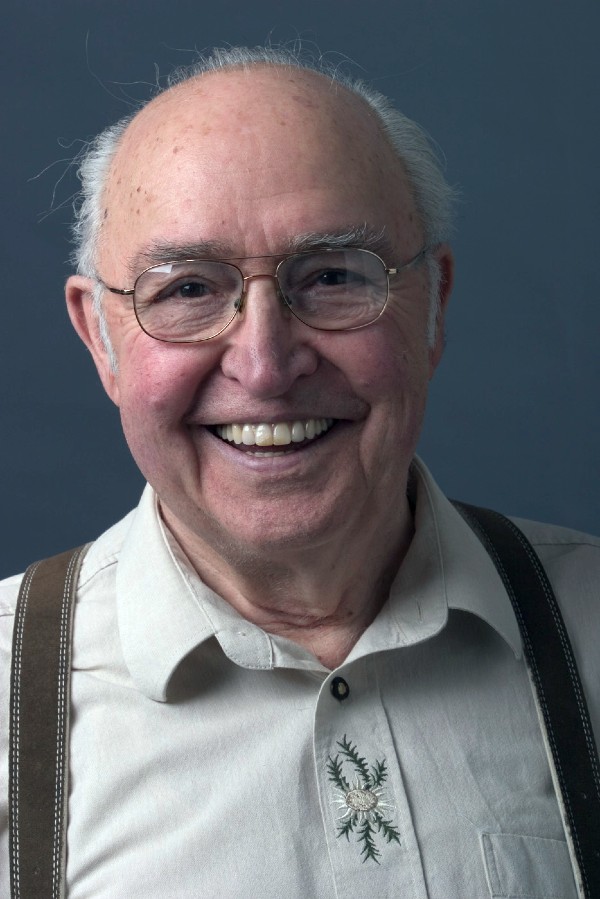
"REMEMBERING GEORGE"
CO-FOUNDER OF THE LEAVENWORTH NUTCRACKER MUSEUM
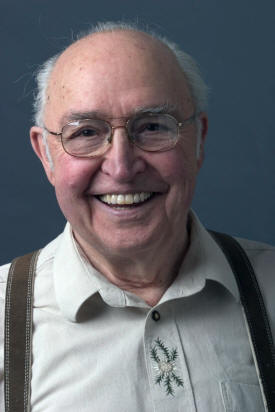
(Written by Arlene Wagner)
 |
When did all this nutcracker frenzy start?
We did not realize it at the time, but it was one day in September
1975 that it all started. George was gathering props for our dance studio’s
first performance of The Nutcracker ballet, and the two of us went to
Seattle to find the perfect nutcracker for Clara. In addition to overseeing
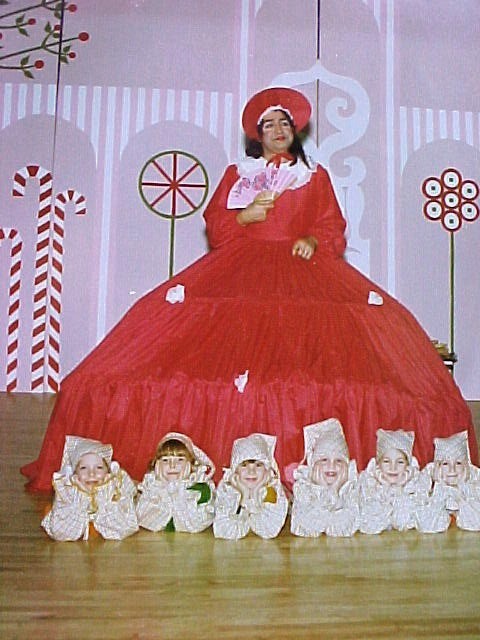
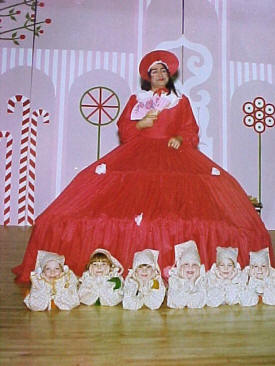
props, George had been chosen to play Mother Ginger in the upcoming
production, as eccentric female roles in classical ballet are traditionally
performed by men. Mother Ginger is the character who wears an enormous hoop
skirt under which little Munchkins hide.
In Seattle, we found ourselves absolutely fascinated and overwhelmed by the
amount and variety of those big-toothed characters who chomp nuts. We not
only found the perfect nutcracker for Clara, but we purchased a few gaily
colored styles for our home. Soon there were a few more…then a few more…and
shortly we had amassed a whole collection of wooden toy soldier nutcrackers.
George made shelves in the dance studio to display some of them and was
surprised at the positive response of the students. |
Then at a Portland antique show we saw, for the first time, exquisitely
carved, centuries old boxwood nutcrackers, and highly decorative metal
handheld designs, even some that were silver-plated---needless to say, we
were hooked! Sharing the same
passion, we combed the aisles of antique shops and shows all over the US,
then ventured to Europe. It was
fun traveling together all those years hunting for nutcrackers, learning all
about the many ways a nut can be cracked, and meeting other collectors and
antique dealers. Our only
arguments all those years were: “We already have that”, “No we don’t”, “Yes
we do”,……….
Our collection reached into the thousands, and we wanted to share it with
others, so in 1995 we opened The Leavenworth Nutcracker Museum. The response
was enthusiastic. We needed display cases, so George and another former
Marine tackled the job, wrestling sheets of plywood all summer long building
case after case. The
electrician had to struggle extra time to do the lighting but admired the
increasing workmanship and dedication of these two amateur cabinetmakers.
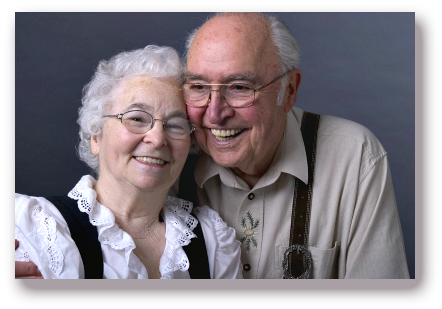 |
As the museum attendance kept growing George suggested we form a non-profit
by donating our collection and the building in which it was housed.
Then other collectors, too, would have somewhere to place their
nutcrackers. This was finalized
in 2006 with George and Arlene Wagner as founders, and since that time about
80 others have donated nutcrackers, making today’s total a staggering 9000
nut-cracking devices. |
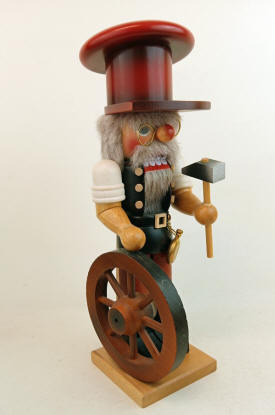 |
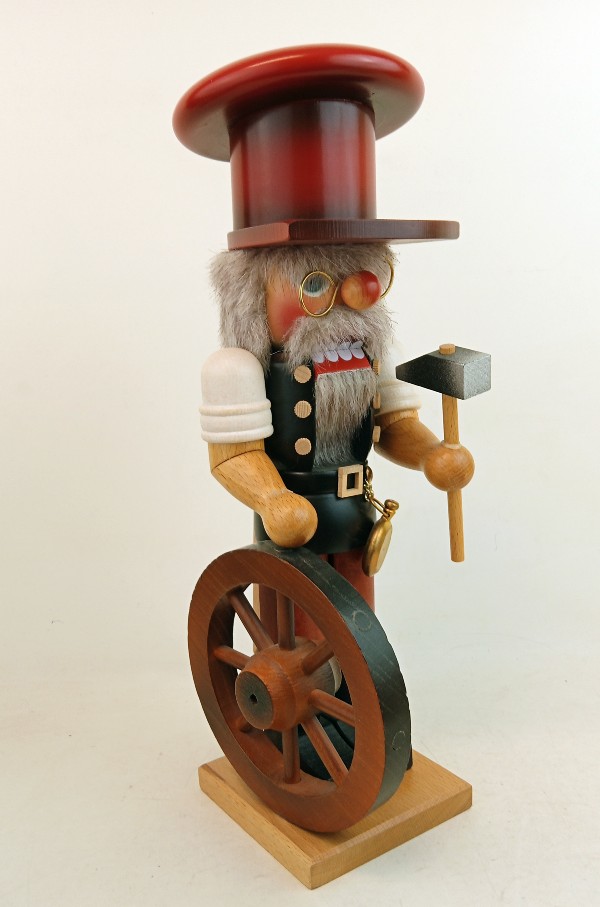
Nutcrackers from the Erzgebirge are often designed after workmen or
professionals, and the Wagner name comes from one who makes wagons or uses a
wagon to cart his goods. Wagon
makers use wheels, so when Christian Ulbricht introduced his Wheelwright
nutcracker in 1989, George claimed it as his own.
|
| |
|
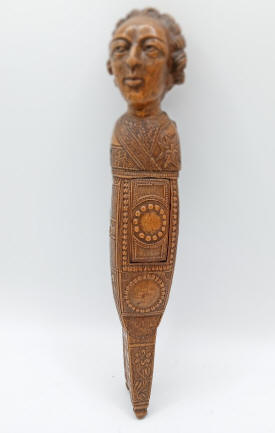 |
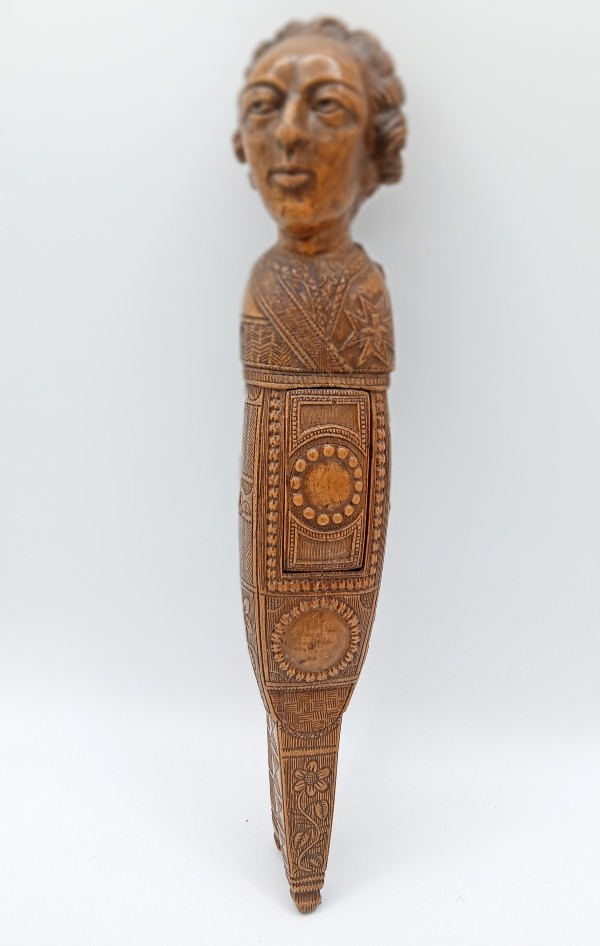
George’s family came from the Alsace, and nutcrackers from this region
differ from the usual as the opening for the nut is in front of the figure.
We found a number of these, and George was especially interested in one
created as King Louis XIV. It has an
exceptionally fine allover intricate design, and its head turned unusually
to the side. It was carved of boxwood in the 18th century. |
| |
|
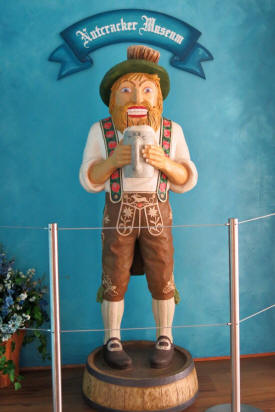 |
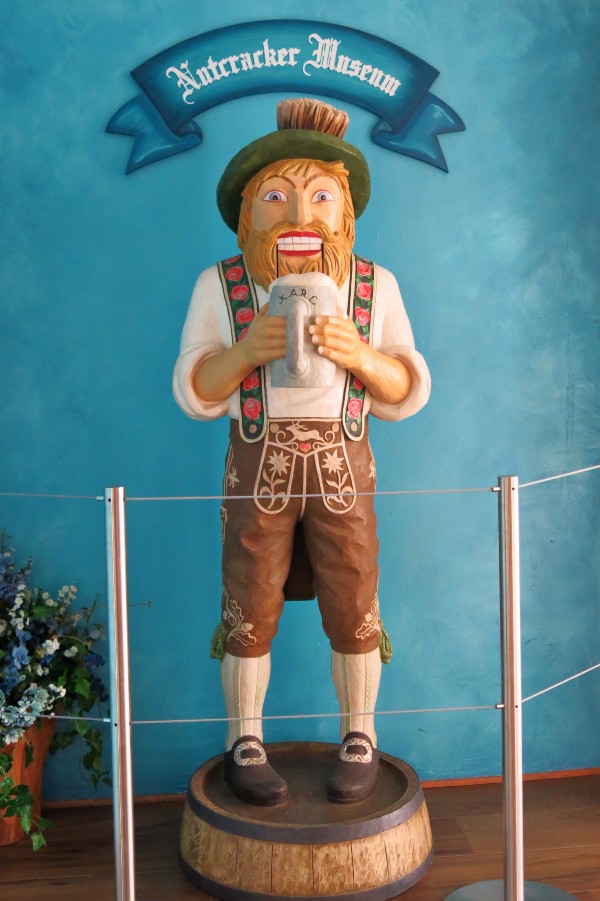
Claudia Davis led us to Karl Rappl in Oberammergau, Germany as he had carved
a 6 foot nutcracker for her late father, Hal Davis.
George commissioned Herr Rappl to
carve a life size happy Bavarian beer drinker, and 18 months later George
received a casket-like box with a huge customs bill.
Luckily Herr Rappl had sent George a picture of himself carving Karl
that had been published in the local paper and labeled “Going to Wagner in
USA”. Karl then became an
“original work of art” and customs charges were dismissed. |
| |
|
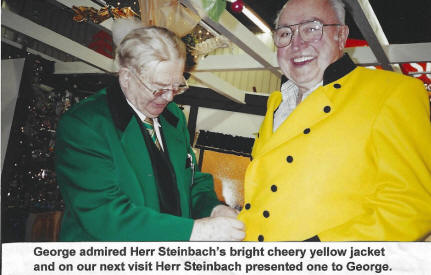 |
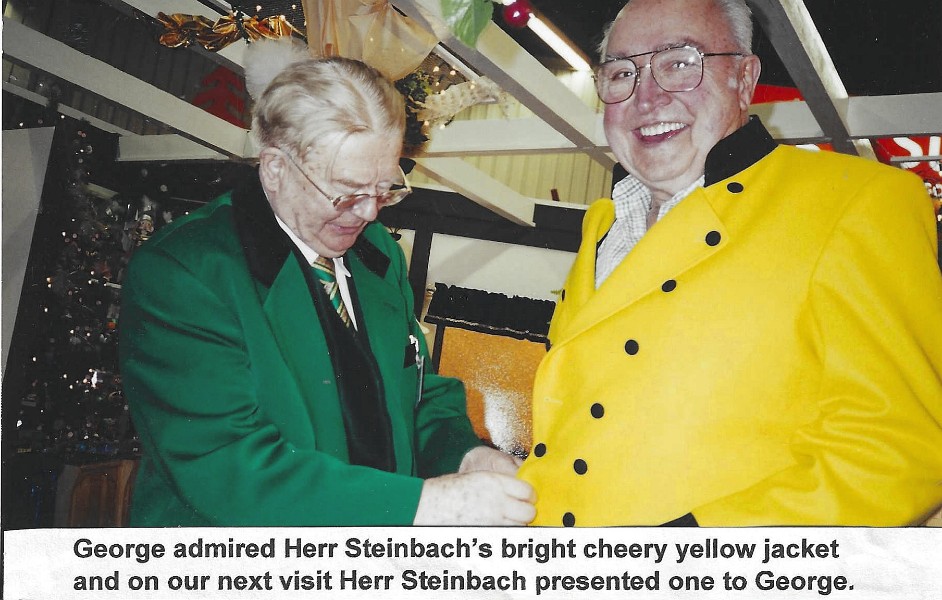
Christian Steinbach enjoyed spending time with George, and when Herr
Steinbach sported a yellow jacket on one of his signing trips to the museum,
he received rounding applause from George. A few months later George walked
into the Steinbach showroom at the Nurnberg gift show, and Herr Steinbach
appeared from the back room with a second yellow jacket which he fitted on
George. |
| |
|
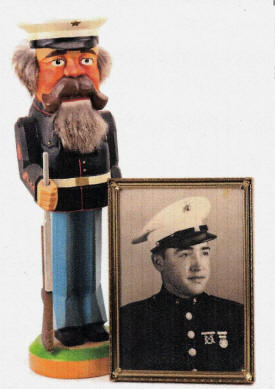 |
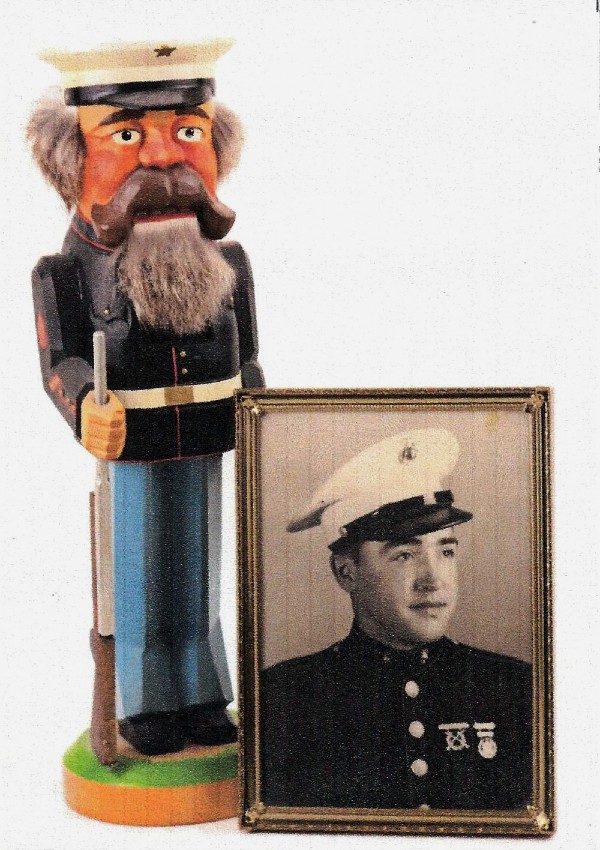
We found Lothar Junghaenel and his carved nutcrackers on one of our first
trips to Germany and George asked if he would carve a US Marine for himself
as he had joined the Marines 2 days after Pearl Harbor at age 17.
When it arrived months later, George
proudly placed it in the museum.
Immediately there were requests from former servicemen to get their
own nutcracker with their service and rank. This was the beginning of the
popular US Serviceman line still carried on today by Lothar’s son, Hanno. .
|
| |
|
 |
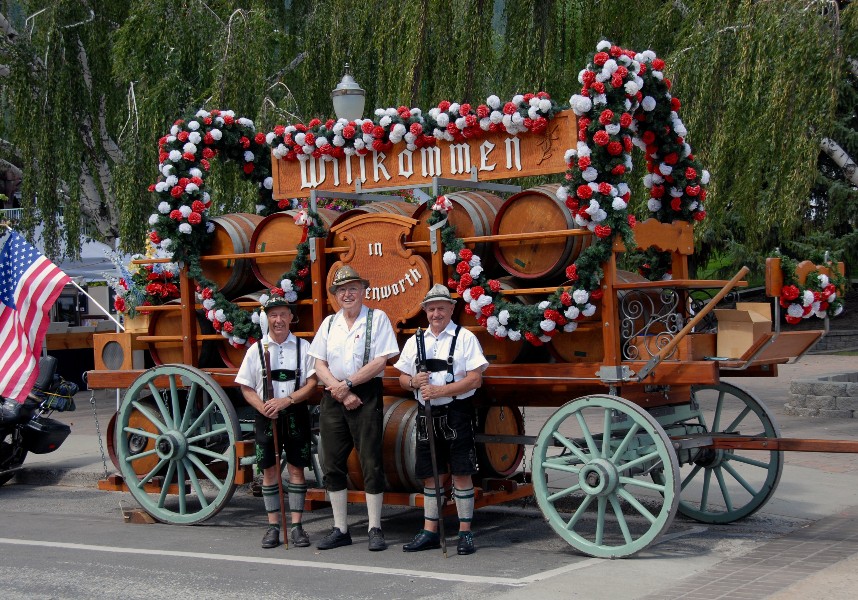
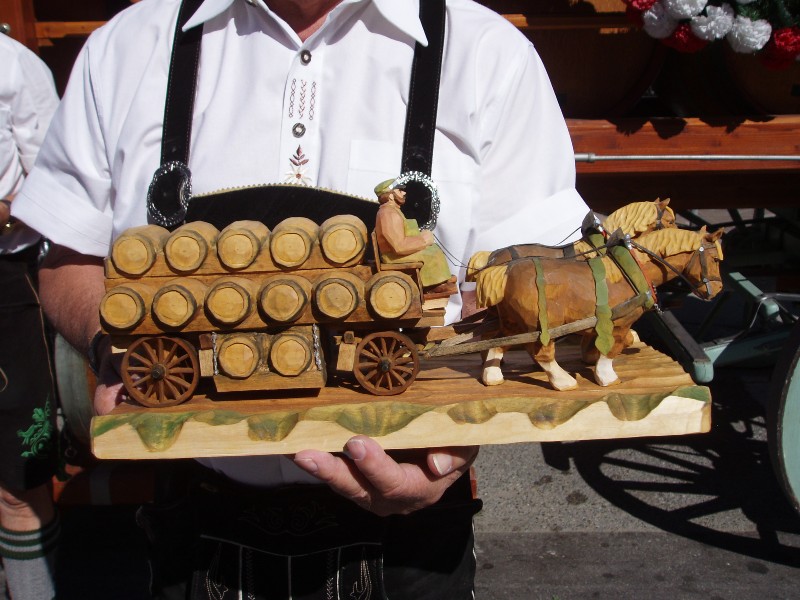
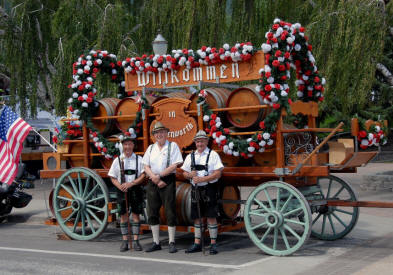
For about 10 years George financially cared for the beer wagon that was
placed downtown Leavenworth every Saturday for the enjoyment of photo-happy
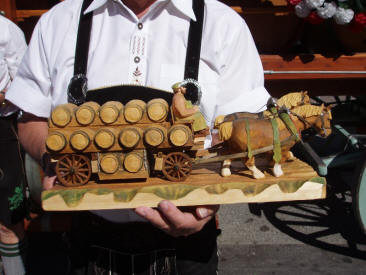
tourists. Matthias Freund of
the Erzgebirge crafted a beer Wagon nutcracker for George, and in turn
George commissioned Matthias to carve 2 more beer wagons for the two men who
faithfully appeared every Saturday in their Bavarian trachen ready for the
cameras. |
| |
|
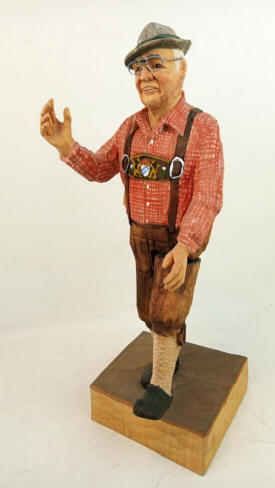 |
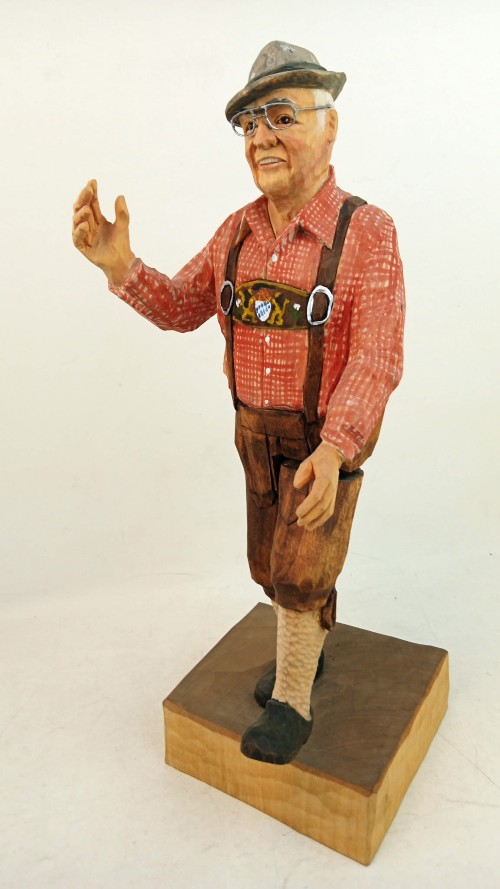
Two other Matthias carvings of George are displayed in the museum--One
representing George as a woodsman earning summertime post-graduate college
funds on his way to becoming a space scientist, and the other as he appeared
in lederhosen each day on the streets of Leavenworth.
To crack a nut, the Bavarian lifts
his leg forward, the nut is deposited in the back of his hip, then it is
crushed as the leg is pushed down. |
| |
|
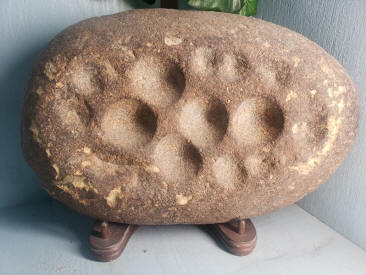 |
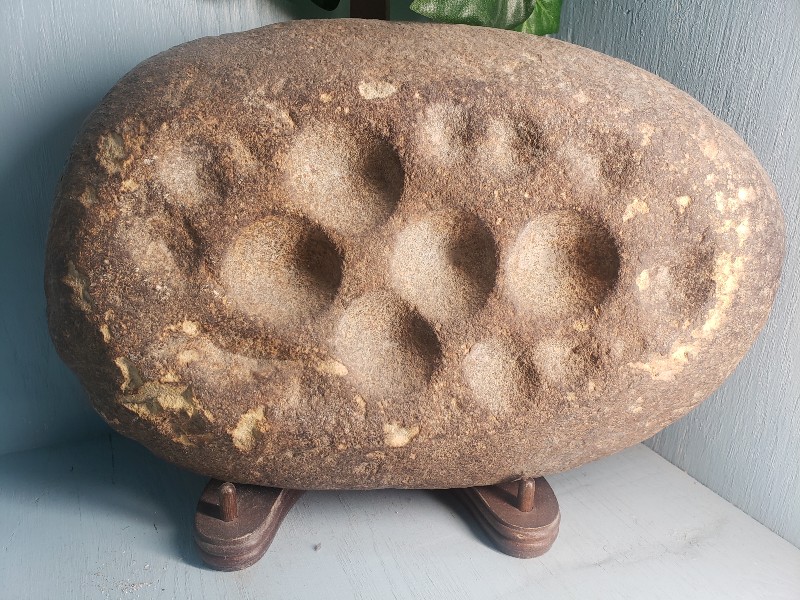
George was fascinated by the nutting stones and purchased many of them from
artifact scavengers in the southeastern part of the US. His favorite, found
in Brown County, Ohio has multiple dimples in a pattern, proof that the
indentations were not an accidental phenomenon of nature.
George was in contact with Prof. Naama Goren-Inbar of the Hebrew
University Institute of Archaeology, who conducted the research at the
archaeological site at Gesher Benot Yaaqov where 780,000-year-old
nutcracking stone tools were found along with nuts of the prickly water
lily. An article about this
site, with pictures of the nutting stones retrieved, was sent to George by
the professor, and is posted in the museum.
|
| |
|
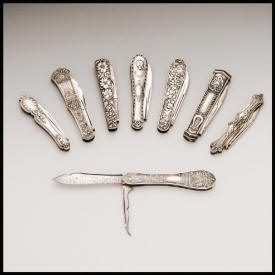 |
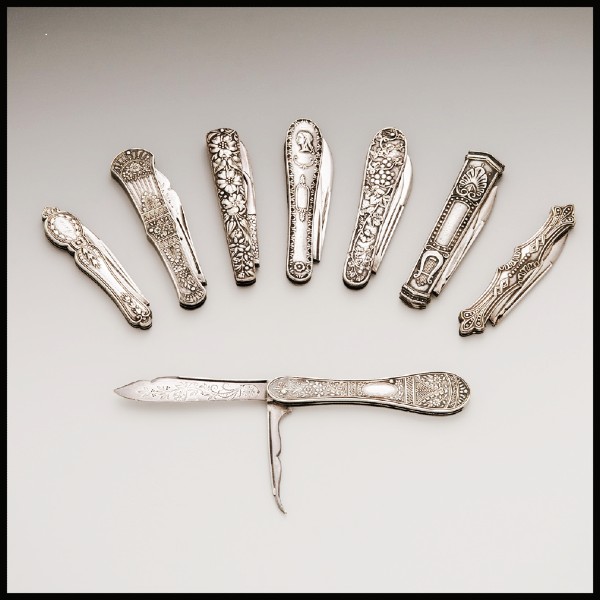
The late Kenneth Pape of Texas enjoyed a huge nutcracker collection and with
it was an immense collection of Victorian silver fruit knives with nutpicks.
George thought the ladies would enjoy seeing these dainty tools so
watched for them at every antique shop.
In New England we arrived at one such shop just as a man poured a
cloth bag full of these silver fruit knives onto the counter in front of the
manager. Immediately George
stepped forward and announced, “I’ll take every one.”
A puzzled Kenneth, on his next trip to Leavenworth, could not
understand how George, in just a few months, could amass a larger
fruit-knife collection than his, many years in the making.
|
| |
|
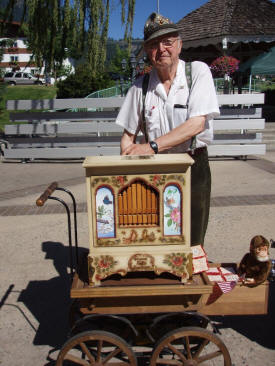 |
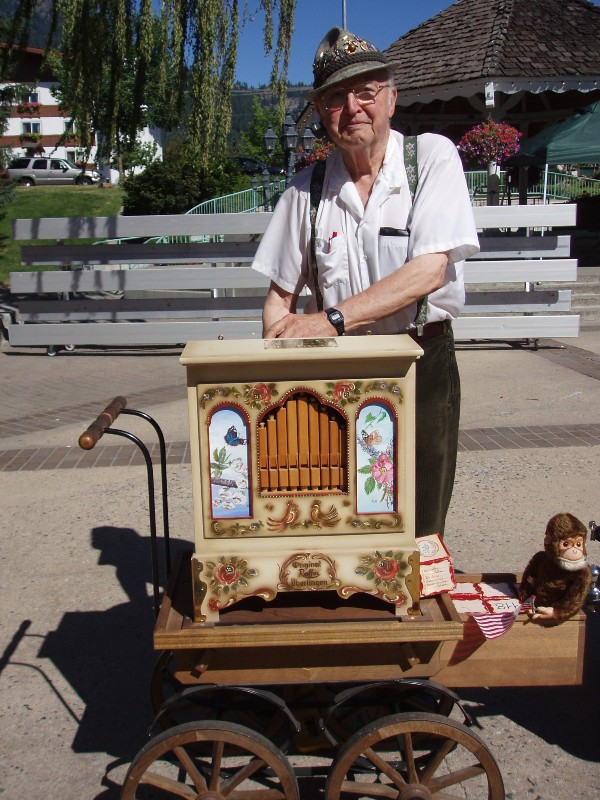
George adopted the Bavarian theme of Leavenworth whole heartedly, even
trying to relearn his youthful accordion playing days but, saying his
fingers were ‘too old’, he traveled to Uberlingen on the Bodensee and
purchased a Drehorgel, a street organ that uses music rolls like a player
piano. It took a few weeks to
get his arm in shape but soon he was happily playing music for the tourists
on the sidewalk and inviting them in to see the nutcrackers.
|
| |
|
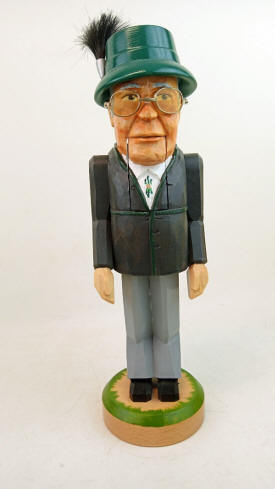 |
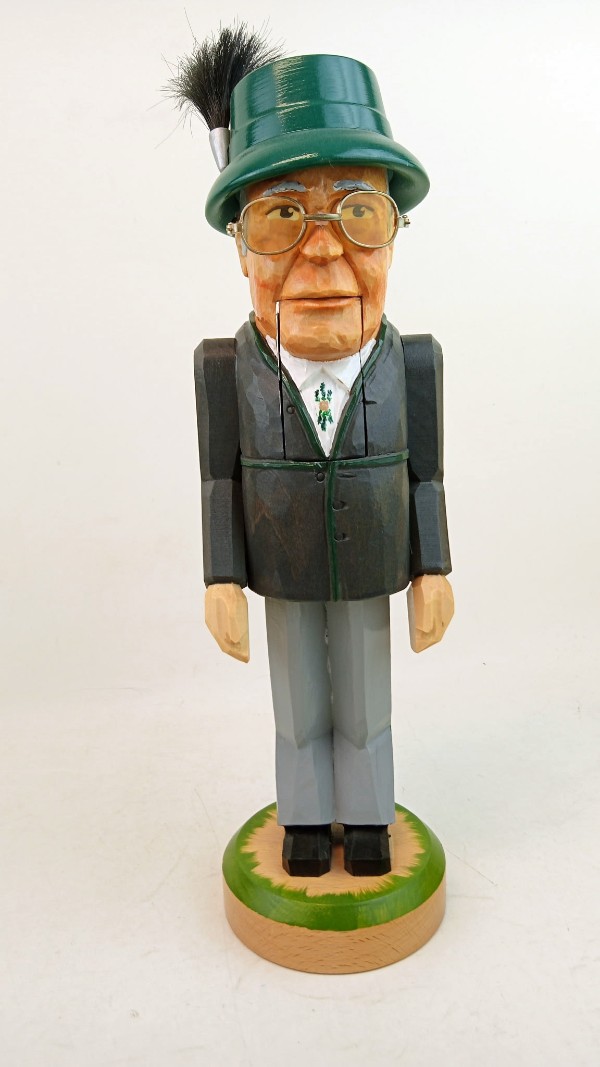
When George passed away, a nutcracker in his image was carved by Lothar
Junghaenel for the museum, and sadly it was one of Lothar’s last carvings as
he, too, soon passed away
Today everyone gives me all the credit for this wonderful museum, but it was
a joint effort by two nutty individuals who just didn’t know when enough was
enough, and If George could see the museum now, he would say “let’s get
it-there’s room for one more”
|
Arlene Wagner, The Nutcracker Lady
Leavenworth Nutcracker Museum
Email: curator@nutcrackermuseum.com
Contact Us
Monday - Saturday 11-5pm
Sunday - 11-4:30pm
We suggest visitors arrive at least 30 minutes before closing.

 Nutcracker
Museum
Nutcracker
Museum