1st Quarter Newsletter 2026
for the Leavenworth Nutcracker Museum
SCREW
NUTCRACKERS -- WHEN WERE THEY INTRODUCED?
It is easier to get a full kernel using a
nutcracker with a screw mechanism as it allows pressure to be applied
gradually until the nut is cracked, unlike the percussion or lever which
apply a more forceful impact: however the screw mechanism was not used in
the making of nutcrackers until the 17th Century. Neither the
builders of the pyramids or the ancient Chinese had this knowledge.
It was a Greek philosopher,
Archytas of Tarentum, that is credited with inventing the screw thread about
400 B.C.
The first screws were made of wood and whittled by hand as accurately
as the whittler could manage. By
the first century A.D., screws of both wood and metal were common in Greek
technology. Several had even survived
the Mount Vesuvius eruption in 79 A.D.
The
development of the screw aided commerce in many ways, the first being known
to assist in the wine industry of Greece, but the screw mechanism was not
known to be used in the making of nutcrackers until the 17th
century.
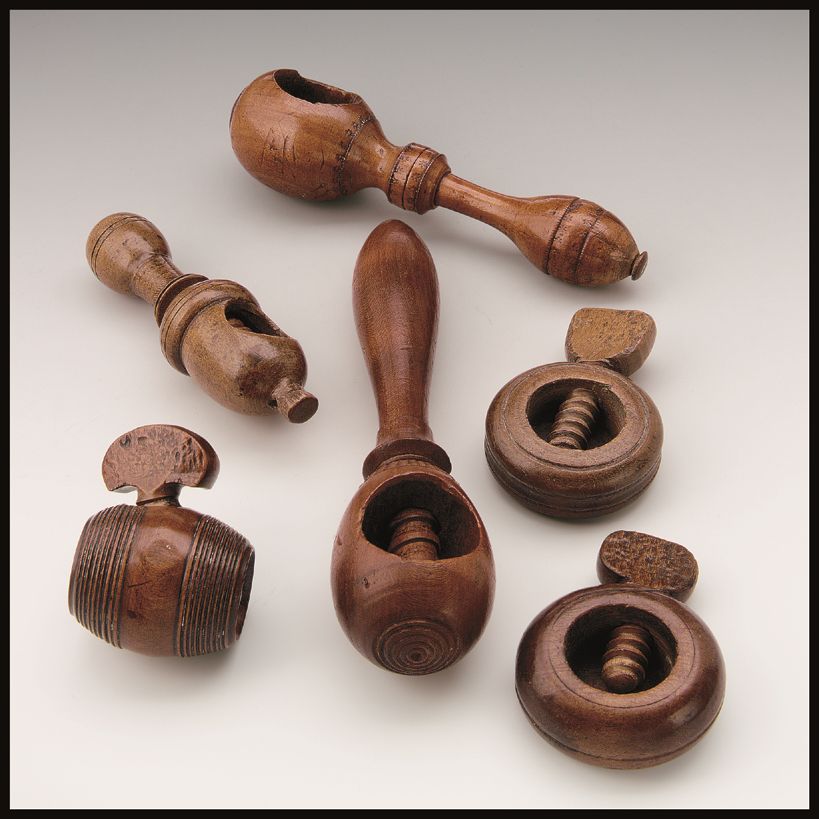
The first screw nutcrackers came from England and were used for
opening the cob nut, the small wild hazelnut requiring only a small
aperture. Consequently these early nutcrackers were small enough to be
carried in the pockets, thus being called ‘Pocket Screws’.
Most of the early wooden English
screws are simple in design, and many have teeth marks on the handles
showing that teeth were used to get better leverage to crack the nut.
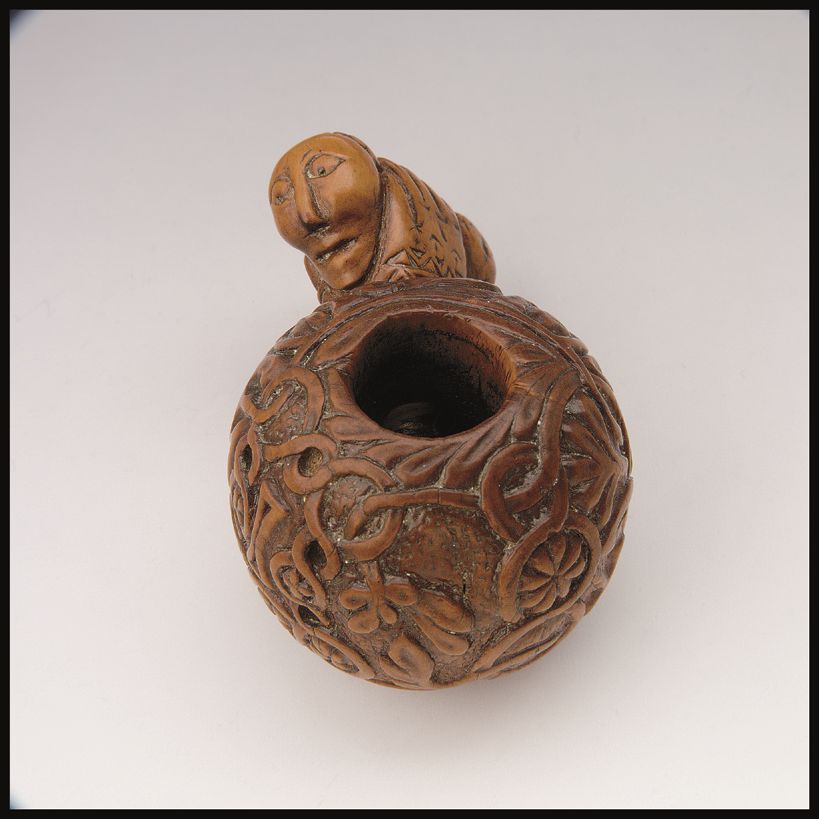
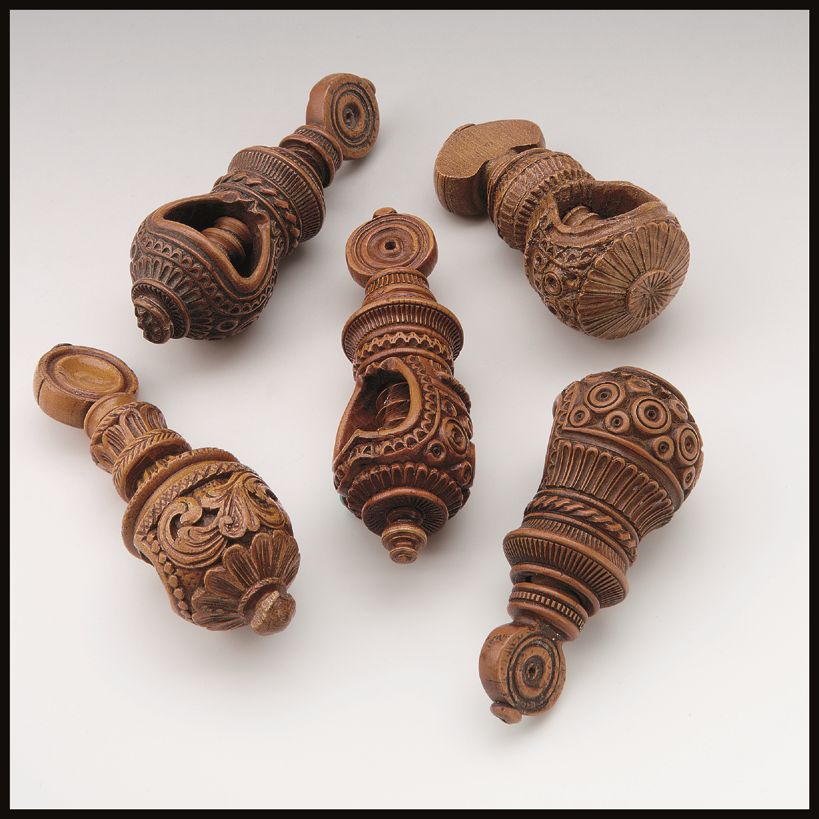
Although most of the early English screws shown in the LNM were
simple in design, the LNM shows a highly decorated boxwood screw dated 1631.
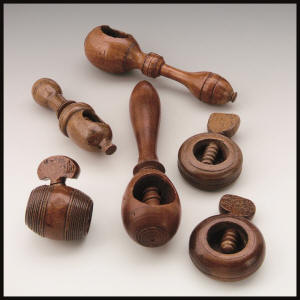
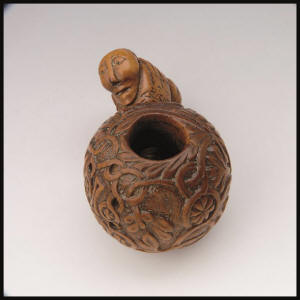
Small simple designs some with teeth marks Elaborate boxwood.
By the 19th
century, hundreds of Swiss carvers were producing nutcrackers to meet the
demand of the tourist explosion in Europe.
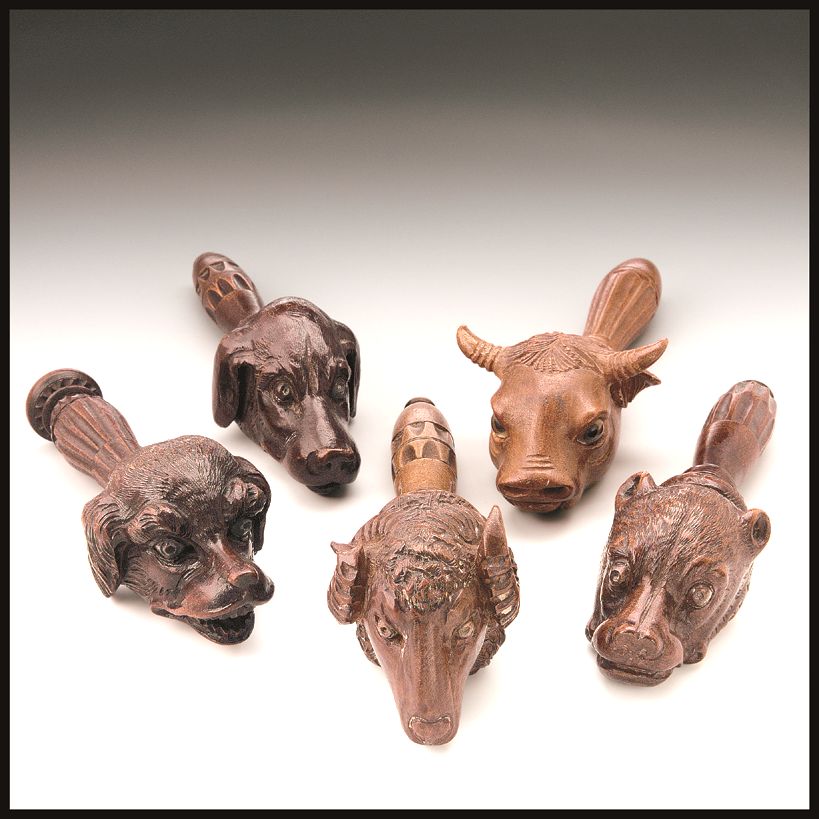
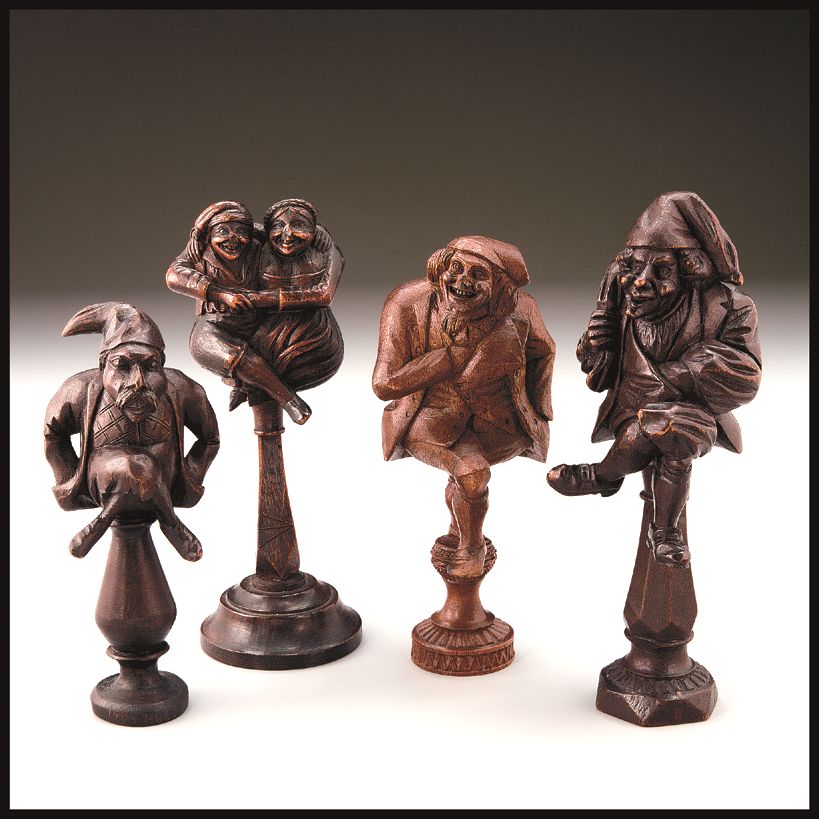
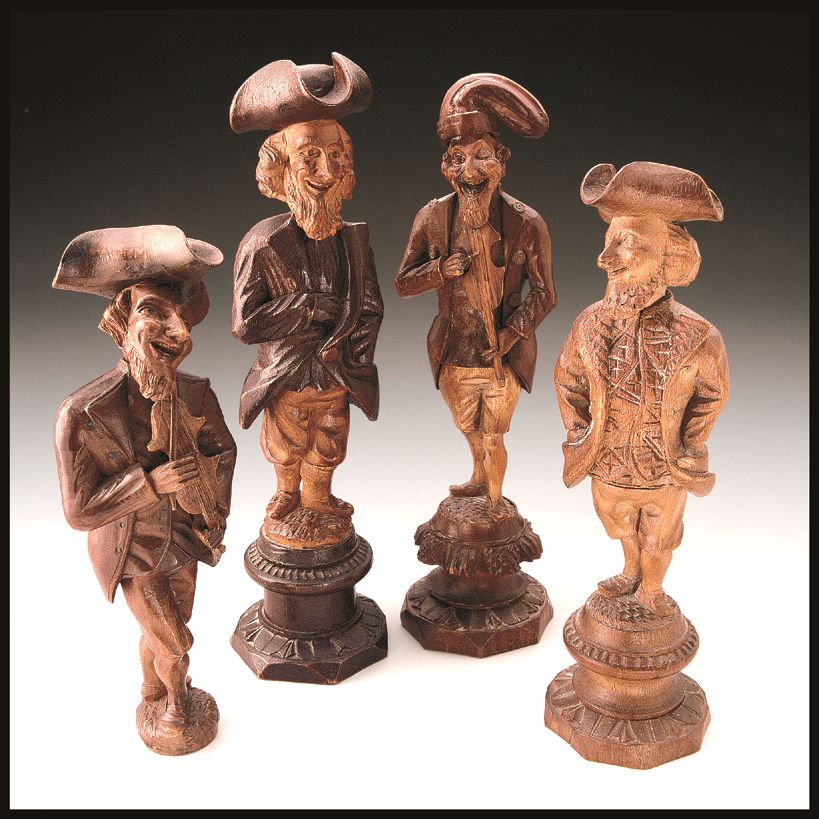
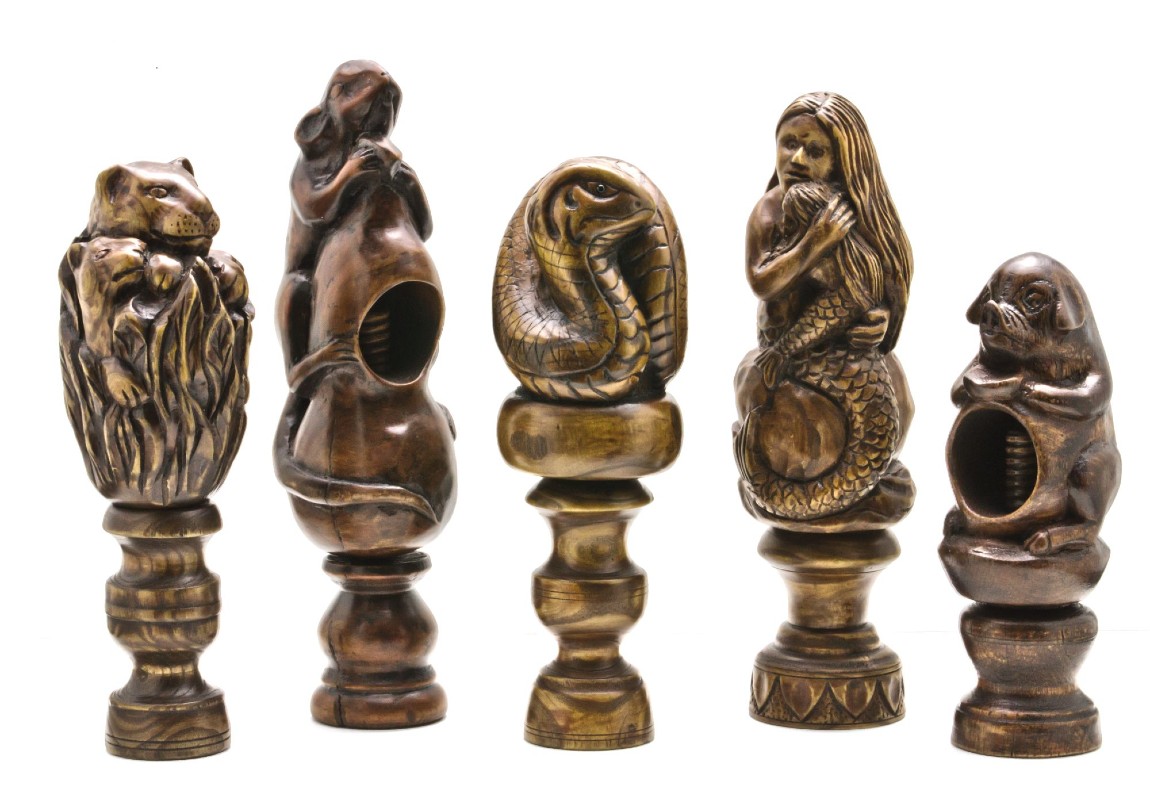
Animal and human figures appeared as nutcrackers from different
conifer and deciduous woods using the screw mechanism.
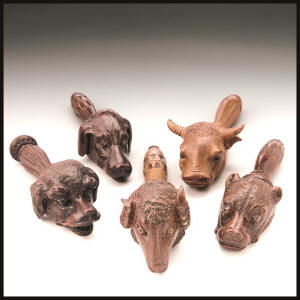
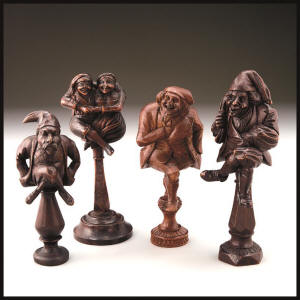
Picture typical swiss animal
tall human screws
Franz Insam, in the Groeden valley of northern Italy, produced a
spectacular variety of screw nutcrackers that were prized by collectors.
They were made of beach and featured delicately carved large hats.
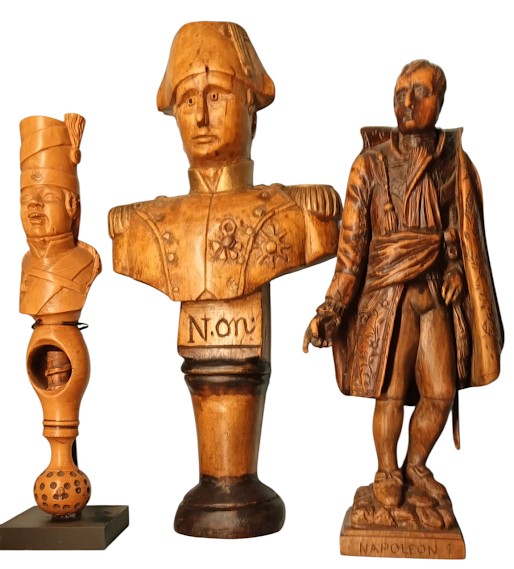
In France the figure of Napoleon was the most popular nutcracker, and
the museum shows a bust with his
medals, one with his Gala Costume, and a Napoleonic soldier.
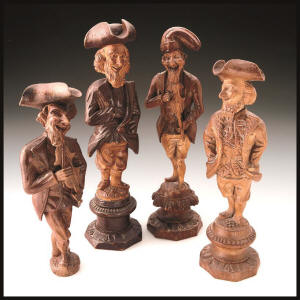
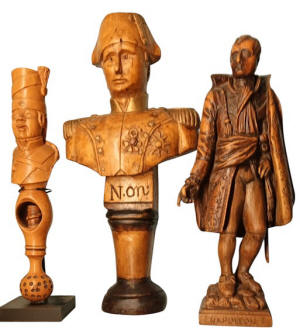
Big Hats
French
An Alpine style of screw nutcrackers emerged in the French speaking
area of Switzerland made of boxwood and highly decorated with sophisticated
roundels and a heart shaped aperature. At the same time, intricate designs
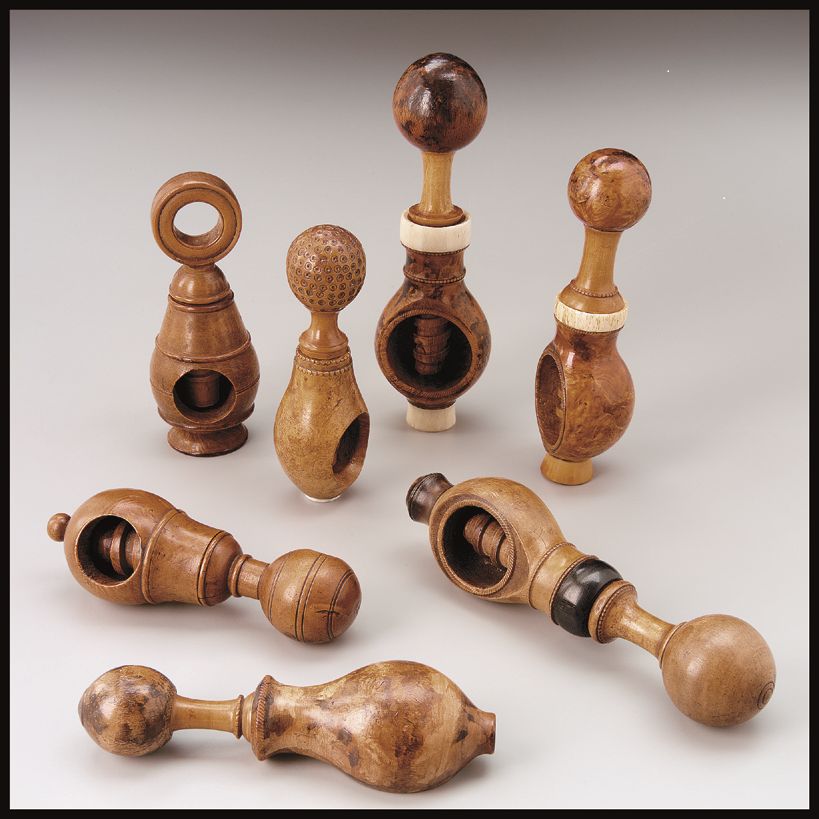
were crafted in France by a maker named Souan using a rounded nob for the
handle. He often used the
interesting wood of a boxwood burr and many had ivory or horn for
embellishments.
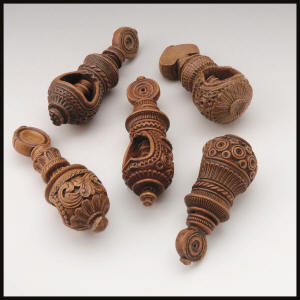
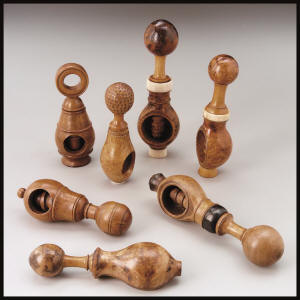
Swiss roundels.
Souan round
As the
tourism in Europe declined, so did the heyday of wood carving decline
and delicately carved wood screw
nutcrackers became a scarce collectible.
They were replaced by simply designed nutcrackers, and children
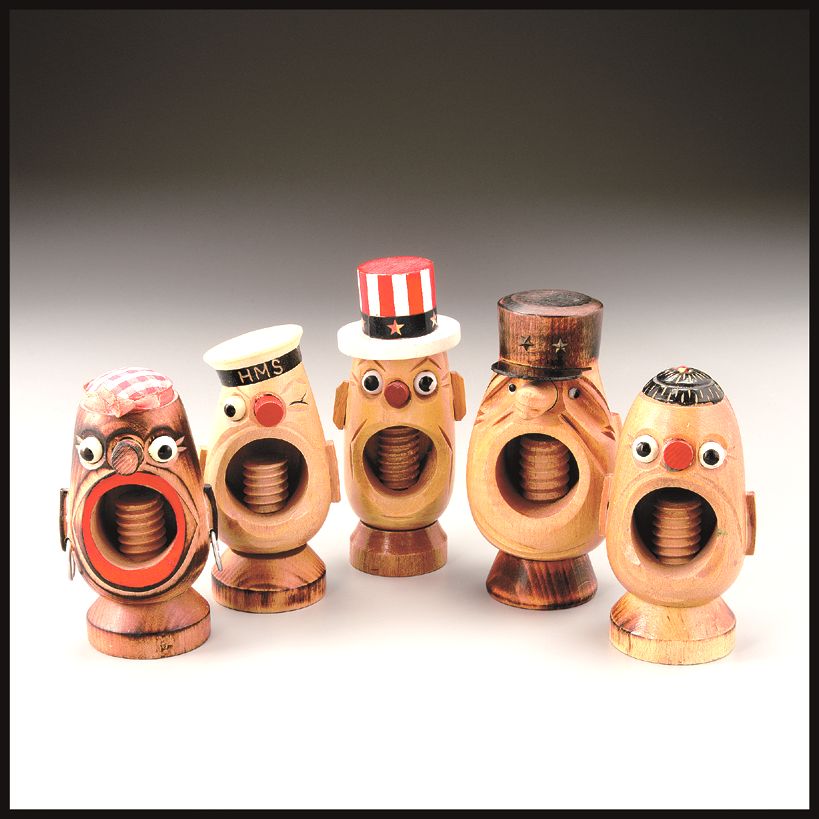
everywhere were having fun cracking nuts with Japan’s famous ‘Funny Faces”.
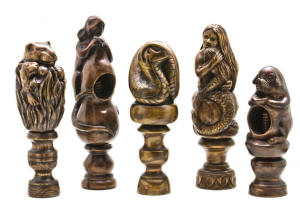
Carvers in Poland were now producing many charming and charas matic screw
nutcrackers in simpler designs and more common woods woods such as oak,and
walnut.
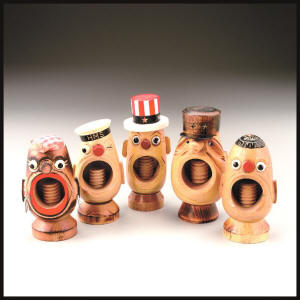
Funny Faces
Polish Carvings
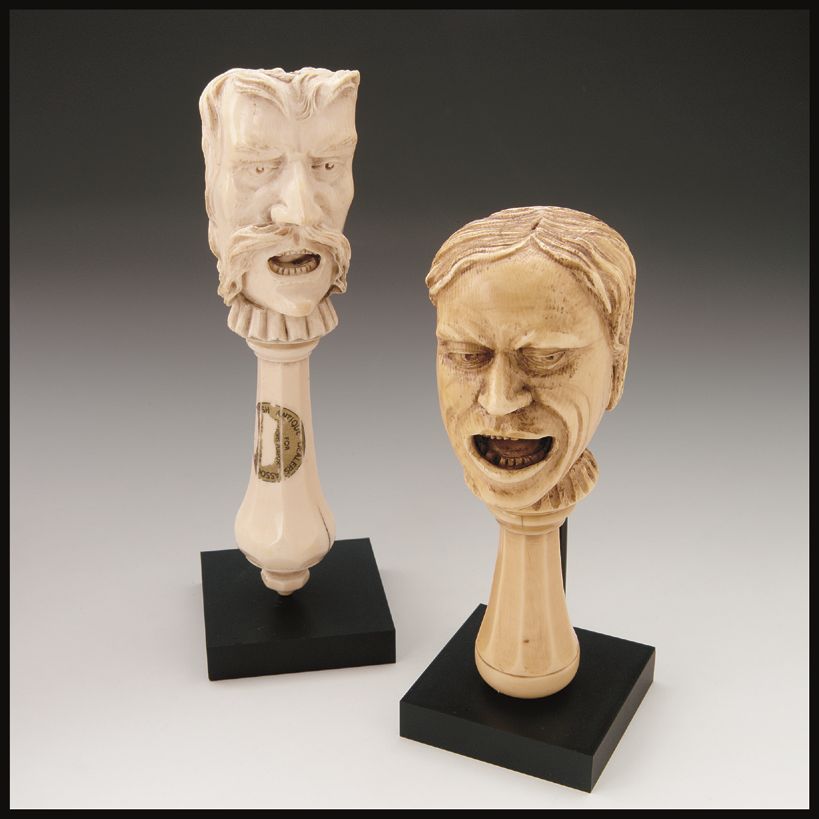
Only a few nutcrackers made of all ivory exist today, most of which
are from the 18th and 19th century.
Although ivory is relatively easy to carve, it is not strong enough
to endure the rigors of the lever nutcrackers, therefore all-ivory
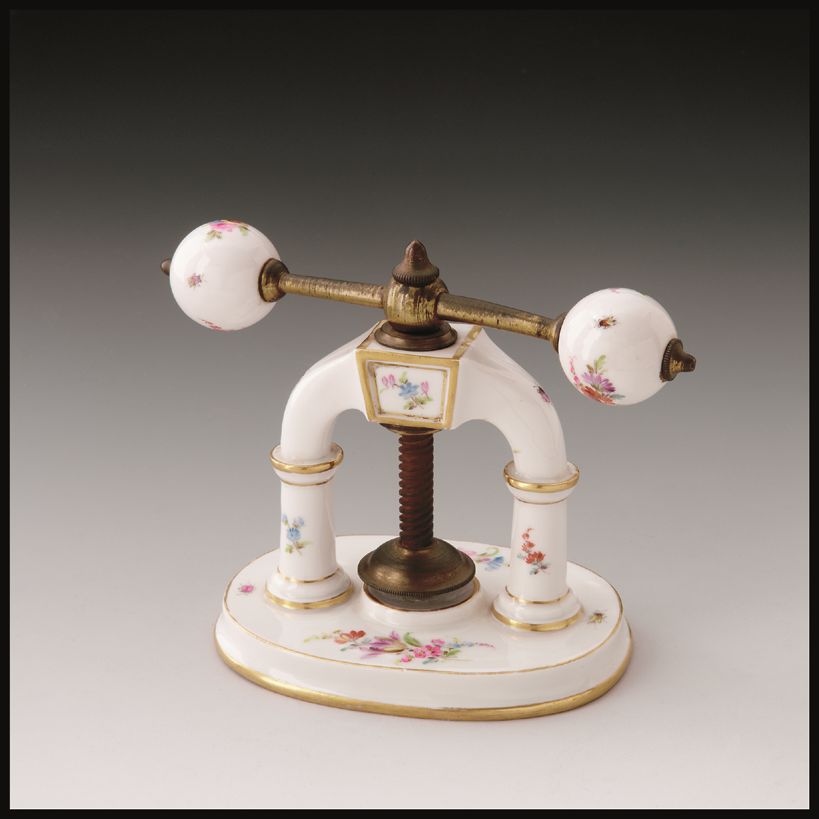
nutcrackers are of the screw variety. The famous Meissen Porcelain factpry
manufactured a limited number of nutcrackers, however the actual
cracking mechanism was made of metal,
usually brass
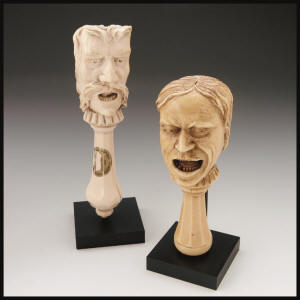
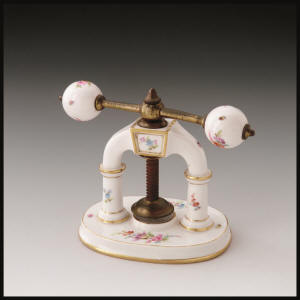
Ivory
Porcelain Meissen
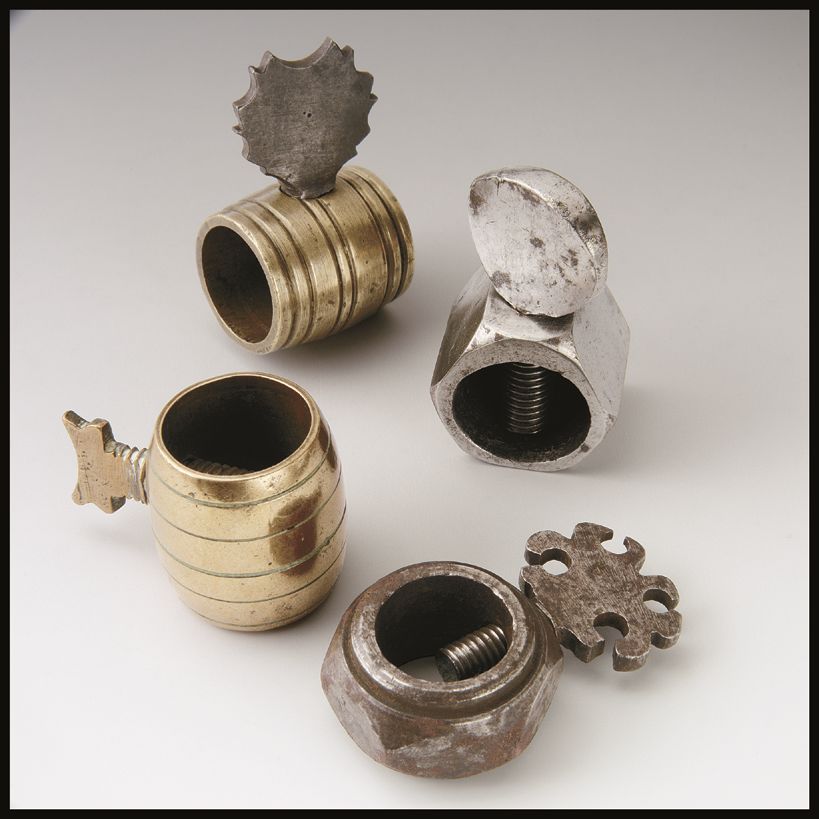
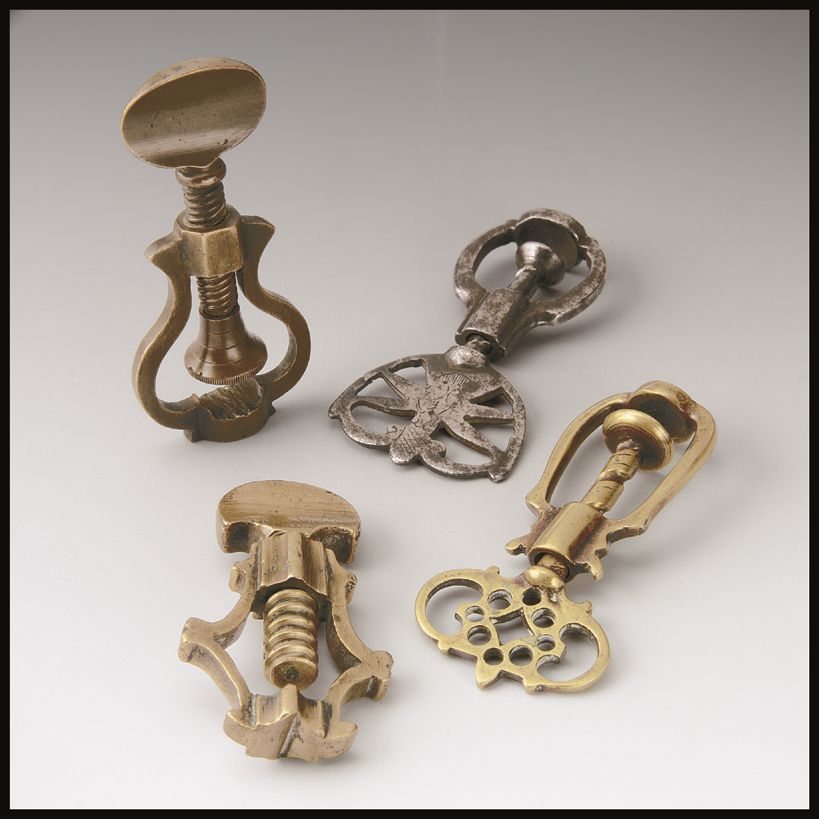
Most of the earliest metal screw nutcrackers shown in the museum
were made in France of iron, simple in design, small in size, also meant to
be carried in the pocket. Expert
metalsmiths however, used brass and silver that was more malleable and
allowed for more intricate designs.
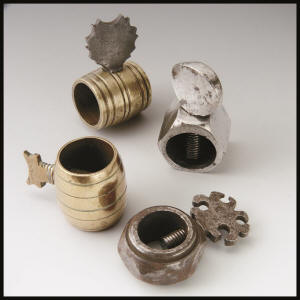
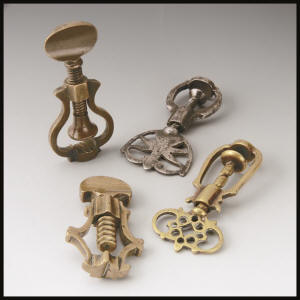
Picture of small simple iron screws.
Picture of
more elaborate brass,
etc. screws.
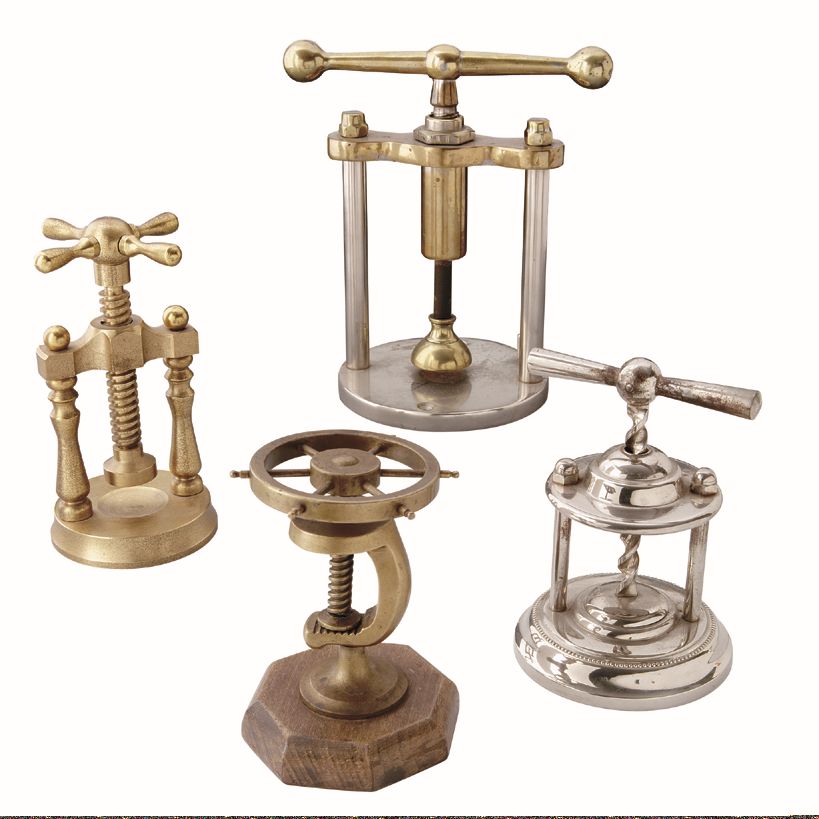
Many metal screws nutcrackers in both metal and wood have been
developed for home use to crack the nuts for grandma’s pies, and
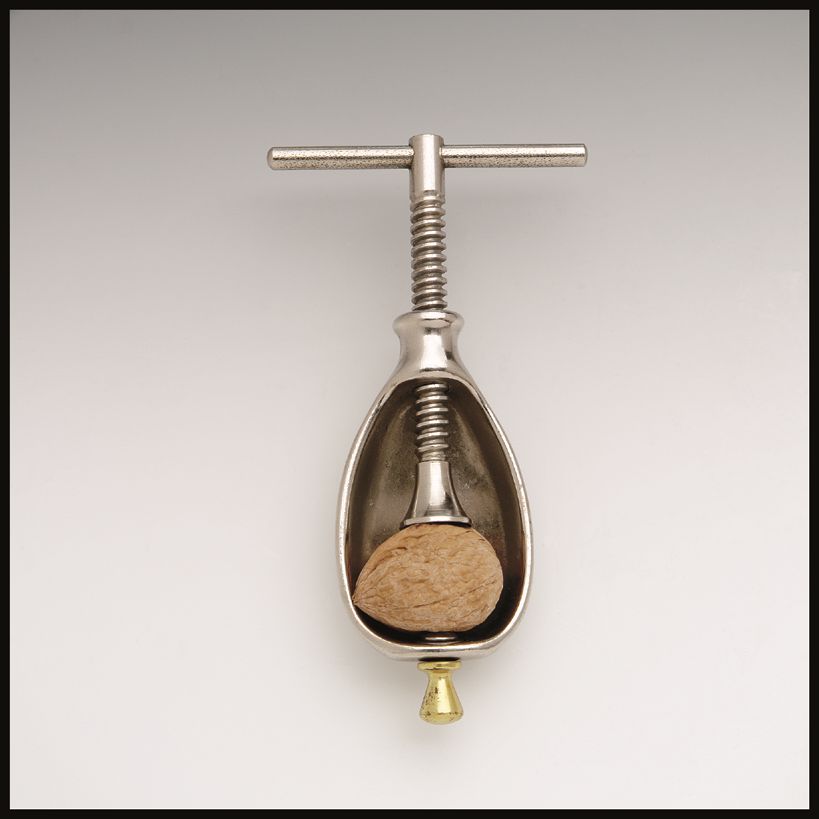
in 1871, the H.M. Quackenbush Company of New York manufactured a cast
iron screw nutcracker that has been reproduced by the millions over the
years. Today you will find it, nickel plated, in almost every local grocery
and kitchen shop.
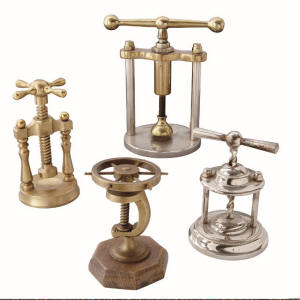
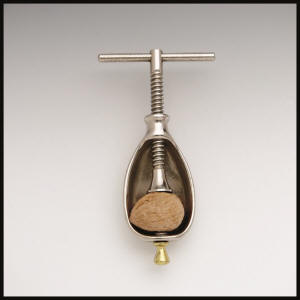
KITCHEN SCREWS
QUACKENBUSH SCREW
FOOTNOTE:
From LOST ART PRESS: “A
History of Threaded Screws”
“The
first person to make a screw probably did it by hand the way the Eskimos
did. Historical photographs suggest the Eskimo’s technique: holding a piece
of antler, bone or wood in one hand, they’d twist it past a knife grasped in
the other. With the blade at an angle to the shaft, the knife would scribe a
helical mark (a spiral) on the material, resulting usually in a left-hand
thread because most people are right-handed (try it!). Then, whittling
toward the incision, they produced a buttress-shaped thread that could hold
a spear tip to its shaft.
That
this isolated aboriginal society had threads is a glitch in the history of
technology, since most researchers believe every screw on earth had direct
ancestors in ancient Greece. Though helices appear in nature and in
decorative arts worldwide, we know of no practical application of the shape
until the first century B.C. in the land of Plato and Aristotle. The pyramid
building Egyptians never thought of it; Chinese machinery did without
screws until the 17th century. So if the Eskimos
did come up with the idea on their own,
they share the pride of invention with a rather sophisticated culture”
Arlene Wagner, The Nutcracker Lady
Leavenworth Nutcracker Museum
Email:
curator@nutcrackermuseum.com

 Nutcracker
Museum
Nutcracker
Museum